


” I’m not in pain, so there can’t be a problem.”
This is probably one of the most common things people say when it comes to wisdom teeth. But with these teeth, the absence of pain does not always mean that everything is fine. A wisdom tooth can be completely symptom-free and still be positioned at an unfavorable angle, lack enough space to erupt properly, or cause problems for the neighboring tooth. That’s why, sometimes, it’s important to know what’s happening with the wisdom tooth—not just whether it hurts.
Why do wisdom teeth often cause problems?
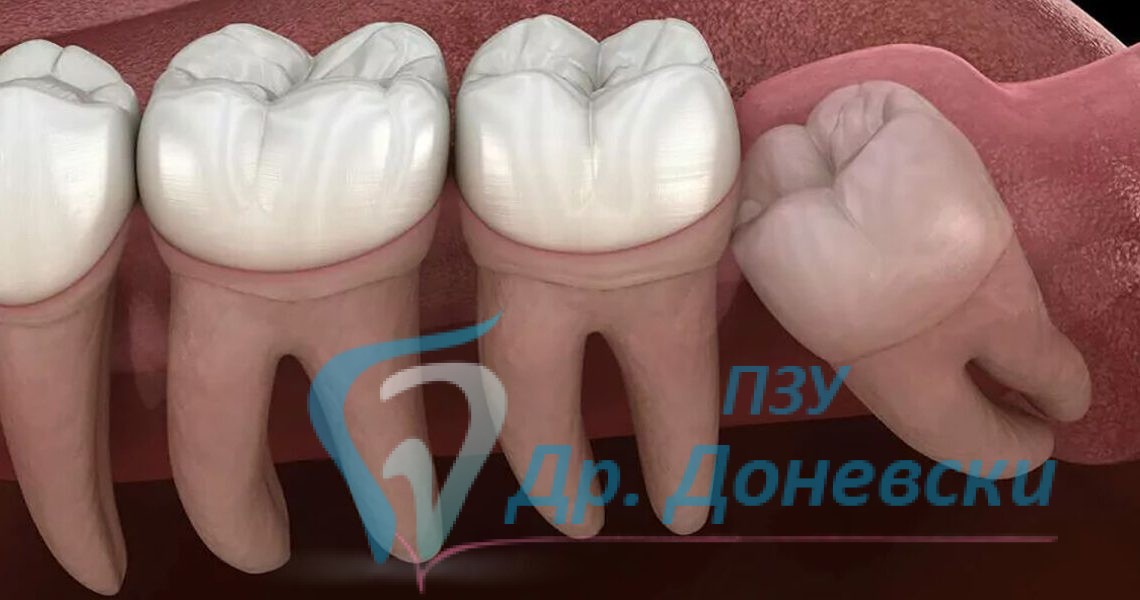
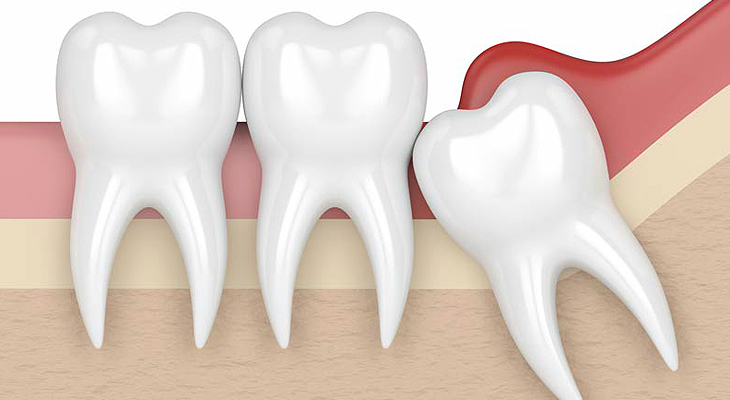
Wisdom teeth are the last teeth to erupt. For this reason, many people do not have enough space for them to erupt properly. They may erupt only partially, remain completely within the bone, or become tilted toward the neighboring tooth. When a tooth does not erupt properly, keeping it clean can be difficult. Food and bacteria can accumulate around it, which over time may lead to inflammation or tooth decay.
Can a wisdom tooth cause problems even if it doesn’t hurt?
Yes. Sometimes the problem develops gradually and does not cause pain at first. For example, a wisdom tooth that is tilted toward the neighboring tooth can create pressure or an area where food becomes trapped. Over time, this can lead to problems with the neighboring tooth as well. That’s why waiting for pain to appear is not always the best way to assess the condition.
What if the wisdom tooth is completely embedded in the bone?
Even a completely unerupted wisdom tooth may require monitoring. Its position can be assessed with a panoramic X-ray, and in certain cases, with a 3D CBCT scan. This allows for a more precise evaluation of where the tooth is located, its relationship with the neighboring tooth and surrounding anatomical structures. This is especially important when surgical removal is being planned.
Does every wisdom tooth have to be removed?
Simply having a wisdom tooth does not mean that it has to be removed.If the tooth is healthy, properly positioned, can be kept clean, and is not causing any problems, in some cases it may simply be monitored. On the other hand, if it is partially erupted, difficult to clean, frequently becomes inflamed, damages the neighboring tooth, or is positioned in a way that increases the risk of future problems, removal may be the better option. The decision should always be based on the individual situation of each patient.
Why is proper planning important?
Wisdom tooth extraction is not the same for every patient. Some wisdom teeth can be removed relatively easily, while others require a surgical procedure. Before proceeding with the extraction, it is important to assess the position of the tooth and its relationship with the surrounding structures. With an appropriate examination and diagnostic imaging, the procedure can be planned more precisely and the potential risks can be better assessed.
Don’t wait for pain to be the first sign.
A wisdom tooth that doesn’t hurt is not necessarily a reason for concern, but it is a reason for proper evaluation. Sometimes, the best decision is to leave the tooth in place and simply monitor it. In other cases, it may be better to remove it before it causes a bigger problem. So, if you have wisdom teeth that have never caused you any pain, the next time you say,
“My wisdom tooth has never hurt,”
ask yourself one more question:
“But do we know what position it is in?”
An examination and appropriate imaging can provide a much clearer answer than the mere absence of pain.